Maintaining a clean, hygienic bathroom is one of the most essential aspects of property management, whether for a high-traffic commercial facility or a busy residential home. Because bathrooms are inherently high-moisture environments subjected to constant daily use, they quickly become breeding grounds for bacteria, mold, soap scum, and mineral buildup. Professional commercial cleaners utilize systematic protocols, specialized tools, and industrial-grade chemistry to sanitize these spaces efficiently. By adopting the time-tested methods used by top providers of janitor services, property owners and facility managers can transform labor-intensive bathroom maintenance into a streamlined, highly effective routine.
1. Establish a Strategic Top-to-Bottom, Clean-to-Dirty Workflow
One of the foundational principles taught across professional janitor services is the logic of cleaning order. Cleaning a bathroom haphazardly—such as scrubbing the floor before wiping down countertops—results in cross-contamination and wasted effort as dust, water, and cleaning solutions drip onto freshly sanitized surfaces.
Always execute bathroom sanitation in a top-to-bottom, clean-to-dirty progression:
-
Start High: Dust ceiling vents, light fixtures, exhaust fan covers, and upper wall corners to dislodge loose dust and cobwebs first.
-
Middle Surfaces: Move to vertical and elevated surfaces, including mirrors, glass shower partitions, wall tiles, counter surfaces, and sinks.
-
Fixtures and Toilets: Address high-touch sanitization points, including faucets, towel dispensers, hand dryers, and toilet structures.
-
Finish Low: Conclude the cleaning pass with the floor, sweeping up dislodged debris before performing a final wet mopping pass toward the exit door.
2. Respect Chemical Dwell Time for Proper Disinfection
A common mistake in routine facility upkeep is wiping away liquid disinfectant immediately after applying it. Experienced teams providing janitor services emphasize that spraying a surface and instantly wiping it off merely cleans the area visually—it does not sanitize or disinfect it.
Disinfectants rely on “dwell time”—the precise duration a surface must remain visibly wet with the chemical solution to eliminate targeted pathogens, viruses, and bacteria:
-
Check the Label: Most commercial-grade EPA-registered disinfectants require between 3 to 10 minutes of uninterrupted wet dwell time to kill hazardous microbes like Norovirus, MRSA, or Staph.
-
Apply First, Clean Later: Spray toilet bowls, urinals, sinks, and tile walls with disinfectant at the start of your cleaning routine. Allow the solution to dwell while you address trash removal, mirror polishing, or paper product restocking.
-
Wipe Clean: Once the recommended contact time has elapsed, wipe down or rinse the surfaces thoroughly.
3. Enforce Color-Coded Microfiber Systems
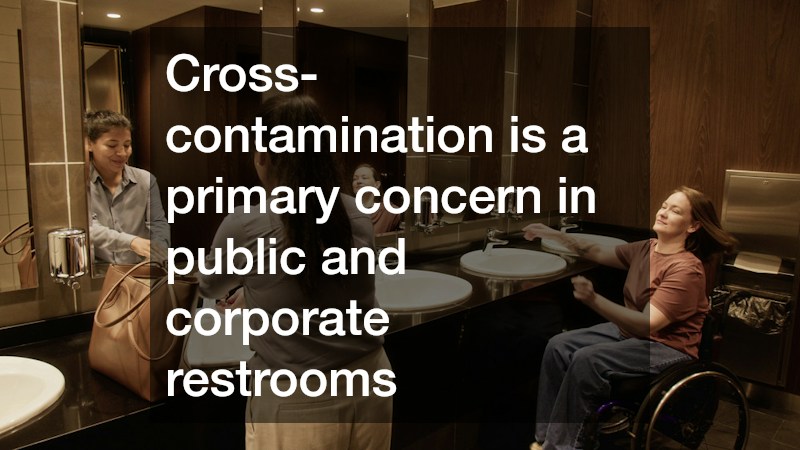
Cross-contamination is a primary concern in public and corporate restrooms. Using the same sponge, rag, or mop head on a toilet seat and subsequently on a sink faucet transfers harmful fecal coliforms directly to hand-washing zones.
To prevent this risk, commercial providers of janitor services implement strict color-coded microfiber systems:
-
Red or Pink Microfiber: Reserved exclusively for high-risk sanitary fixtures, including toilet bowls, urinals, and surrounding partition walls.
-
Yellow Microfiber: Used for sinks, countertops, mirrors, and general fixture wiping.
-
Blue Microfiber: Designated for glass polishing, mirrors, and low-touch hard surfaces.
-
Green Microfiber: Applied in kitchen areas, breakrooms, or general dusting spaces to keep bathroom tools completely separated from food prep environments.
Microfiber materials are superior to traditional cotton cloths because their microscopic split fibers trap and remove up to 99% of surface bacteria through physical friction alone, requiring fewer harsh chemicals to achieve superior sanitation.
4. Tackle Hard Water and Soap Scum with Mineral-Specific Cleaners
Soap scum, body oils, and hard water minerals (calcium and magnesium) create stubborn, cloudy films on glass doors, chrome fixtures, and porcelain tiles. Standard multi-purpose cleaners often fail to dissolve these mineral deposits because they lack the appropriate chemical pH.
Commercial cleaning specialists employ targeted chemical strategy:
-
Acidic Cleaners for Mineral Buildup: Use mild acidic or phosphoric cleaners to dissolve alkaline hard water spots, rust stains, and lime scale around faucets and drain rims.
-
Neutral pH Cleaners for Natural Stone: Never use acidic solutions on natural stone materials like marble or granite, as acids cause permanent etching. Instead, use pH-neutral stone scrubbers paired with non-abrasive white scrub pads.
-
Squeegee Glass Daily: Prevent mineral spots from etching glass shower enclosures or commercial dividers by using a heavy-duty rubber squeegee after cleaning passes to remove standing water completely.
5. Master Deep Floor Care and Grout Restoration
Tile floors and porous grout lines absorb moisture, dirt, and organic compounds, leading to dark staining and unpleasant lingering odors. Standard string mops often worsen the problem by pushing dirty mop water directly into porous grout lines.
Professional providers of janitor services rely on systematic floor restoration protocols:
-
Grout Agitation: Apply an alkaline floor degreaser directly to tile floor surfaces and scrub grout lines using a stiff, dual-angle grout brush to break up trapped grease and embedded grime.
-
Dual-Bucket Mopping: Always utilize a dual-bucket mopping system—one bucket for fresh cleaning solution and a separate bucket with a wringer for dirty rinse water. This prevents redistributing soil back onto freshly scrubbed tiles.
-
Moisture Management: Ensure floor surfaces dry rapidly by turning on exhaust fans or placing commercial air movers in high-traffic restrooms to eliminate slip-and-fall hazards and prevent mold spore germination.
Maintaining Long-Term Bathroom Sanitation
Achieving a truly clean, hygienic bathroom environment requires a balance of proper order, correct chemical dwell times, specialized equipment, and consistent care. By incorporating these proven techniques from professional janitor services into your facility or home maintenance routine, you can protect occupant health, prevent costly material degradation, and maintain a pristine, welcoming environment year-round.
About the Author