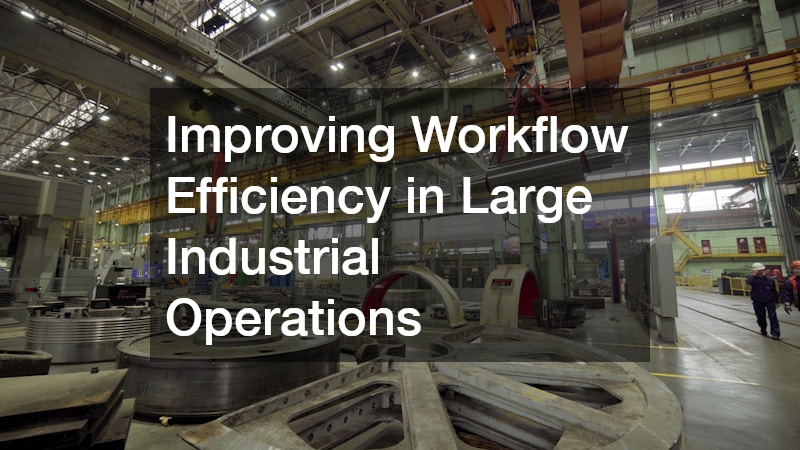
Large industrial operations are complex ecosystems. Materials arrive, parts move through multiple hands, heavy assets operate under intense conditions, and deadlines rarely move. When workflow is smooth, everything feels almost effortless. When it isn’t, small inefficiencies multiply into missed deadlines, rising costs, and frustrated teams.
Many facility leaders assume inefficiency comes from one major failure point: outdated equipment, staffing shortages, or supply chain disruptions. In reality, workflow breakdowns usually stem from smaller, layered issues—unclear handoffs, reactive maintenance, poor layout decisions, or vendor misalignment.
Improving workflow efficiency requires looking at the entire operation as a connected system rather than isolated departments. The following guide walks through practical, experience-based strategies for tightening processes, reducing downtime, and building a more resilient operation from the ground up.
1. Map Every Process Before You Attempt to Optimize It

Most large operations try to fix problems before fully understanding them. A supervisor notices delays in fabrication, so they add overtime. Install crews complain about incomplete parts, so procurement tightens deadlines. These reactions treat symptoms, not root causes.
Start with a full operational workflow audit.
Walk the floor. Trace a single project from start to finish. If your facility handles custom metal fabrication, document how raw material moves from receiving to cutting, welding, finishing, and staging. Note every handoff. Record every pause.
Then, examine how fabrication work transitions to field deployment. Misalignment between shop output and industrial equipment installers in the field often causes expensive idle time. Installers arrive ready to work, only to discover missing components or incomplete prep work. Meanwhile, shop teams may be unaware of shifting field schedules.
To correct this, create shared visibility:
- Implement a live production dashboard accessible to both fabrication supervisors and field coordinators.
- Standardize job packets that clearly outline specifications, tolerances, and deadlines.
- Hold short weekly alignment meetings between shop managers and installation leads.
Process mapping software can also reveal hidden bottlenecks. Value stream mapping highlights non-value-added steps, such as unnecessary staging or duplicate quality checks. Even simple whiteboard diagrams can expose inefficiencies once everyone sees the entire system laid out visually.
Optimization only works when you fully understand what you’re optimizing.
2. Reduce Equipment Downtime With Structured Preventive Maintenance
In large operations, equipment downtime is rarely just an inconvenience. It can stall production lines, delay client projects, and create safety risks.
Many facilities operate in reactive mode. A crane fails, and everyone scrambles for crane repair. A transport vehicle breaks down, and heavy duty towing becomes an urgent necessity. While emergencies can’t be eliminated entirely, their frequency can be dramatically reduced.
Begin by shifting from reactive to predictive maintenance.
Use equipment data—runtime hours, vibration patterns, temperature fluctuations—to anticipate wear before failure occurs. Modern monitoring systems can alert maintenance teams when components approach critical thresholds.
Next, establish tiered response protocols:
- Minor performance deviations trigger internal inspection within 24 hours.
- Moderate warning indicators escalate to scheduled downtime.
- Severe alerts activate pre-arranged service agreements.
Pre-negotiated service contracts for specialized repairs or towing reduce response time during genuine emergencies. Instead of scrambling to find availability, you already have priority support lined up.
Finally, track metrics that matter:
- Mean time between failures
- Cost per maintenance hour
- Downtime per asset category
When leadership reviews these numbers monthly, maintenance becomes strategic rather than reactive.
3. Improve Surface Treatment and Finishing Workflow Turnaround
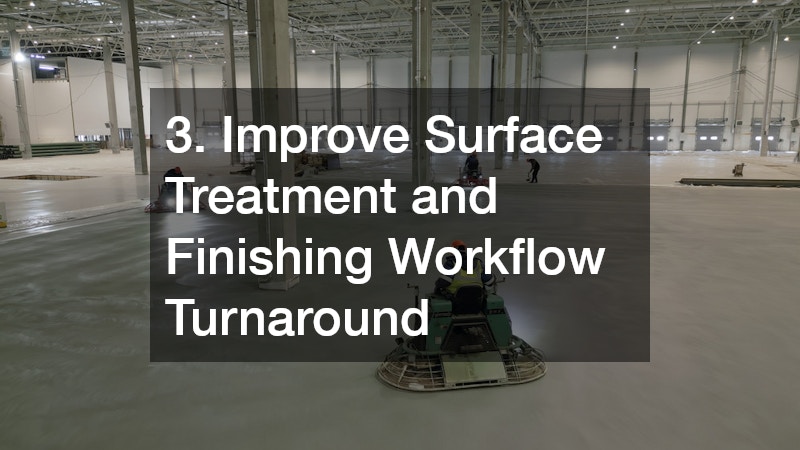
Surface preparation and finishing often create hidden workflow slowdowns. Parts wait too long between processes, coatings fail due to rushed prep, or finished items require rework.
Consider how materials move between industrial sandblasting and powder coating services. If blasting completes a batch but coating isn’t scheduled for another two days, parts may accumulate contaminants, requiring repeat prep. That’s lost labor and wasted time.
One effective strategy is synchronized scheduling. Instead of batching by department, batch by project. Coordinate prep and finishing timelines so parts move immediately from blasting to coating within tightly defined windows.
Automation can also help:
- Conveyor systems eliminate manual transfers.
- Barcode tracking ensures each component is scanned and logged at every stage.
- Digital alerts notify finishing teams when prep work is complete.
Quality control checkpoints are equally important. Establish inspection standards before blasting begins and after coating cures. Catching imperfections early prevents full rework cycles.
The goal is simple: continuous movement without sacrificing quality.
4. Consolidate Vendor Management to Minimize Scheduling Gaps
Large operations often rely on multiple external vendors. The problem isn’t outsourcing—it’s fragmentation.
For example, fleet washing may be scheduled independently from maintenance windows, forcing vehicles out of rotation twice in one week. Similarly, heavy equipment painting might occur during peak production periods instead of planned downtime.
Centralize vendor coordination under a single operations manager or digital scheduling system. Maintain a master calendar that includes:
- Planned shutdowns
- Equipment servicing
- Cleaning cycles
- Repainting projects
When vendors align with internal schedules, downtime consolidates instead of multiplying.
Performance metrics should guide vendor relationships. Track:
- On-time completion rates
- Cost overruns
- Rework incidents
Vendors that consistently integrate smoothly into your workflow become long-term partners. Those who create disruption may need reassessment.
Efficiency improves when outside services feel like extensions of your team rather than separate entities.
5. Optimize Facility Layout for Movement and Accessibility
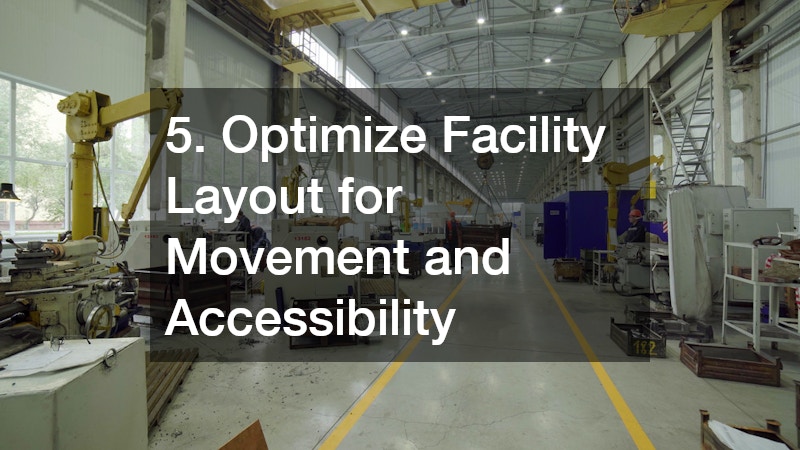
Facility layout directly impacts workflow efficiency. Yet many industrial sites grow organically over time. New equipment gets installed wherever space allows. Offices expand into former storage areas. Refrigeration units get tucked into corners without considering service access.
Begin with a simple question: how far do people and materials travel each day?
Map walking paths, forklift routes, and staging areas. You may discover excessive cross-traffic or unnecessary backtracking.
Administrative areas also influence operational speed. Strategic office furnishing can improve visibility between supervisors and floor teams. Glass partitions, centralized monitoring stations, and proximity to high-traffic zones improve oversight without constant interruptions.
Temperature-sensitive systems require thoughtful placement as well. Poorly positioned commercial refrigeration units can disrupt workflow if maintenance requires blocking major pathways.
When redesigning layout:
- Prioritize straight-line material flow.
- Minimize crossing traffic lanes.
- Ensure maintenance access without halting adjacent operations.
Even modest layout adjustments can yield measurable efficiency gains.
6. Standardize Communication Across Departments
Miscommunication quietly drains efficiency. Verbal instructions get forgotten. Emails get buried. Teams assume someone else handled a task.
What makes communication breakdowns especially damaging in large industrial environments is that they rarely look dramatic at first. There’s no explosion, no obvious failure—just a slight delay here, a misunderstood instruction there. A supervisor tells a technician, “Let’s push that inspection to tomorrow,” but doesn’t log the change. A procurement manager assumes a part has been ordered because it was mentioned in a meeting. A shift lead believes the previous crew completed a calibration because it was “on the list.”
Each small assumption creates friction. Over time, friction becomes lost hours.
One operations director once described a recurring issue: maintenance believed production had approved downtime, while production assumed maintenance would wait until the next shift. The result? Unplanned shutdown during peak output.
That single misalignment triggered a chain reaction. Customer shipments were delayed. Overtime costs increased. Leadership demanded explanations. Yet no one had acted irresponsibly—there was simply no structured confirmation process. Both departments operated on good faith and an informal agreement.
In high-output facilities, good faith isn’t enough. Clarity must be built into the system.
Replace informal communication with structured systems.
That doesn’t mean adding layers of bureaucracy. It means creating reliable pathways for information to move without distortion.
Digital work order platforms ensure every request is documented, timestamped, and assigned. Instead of hallway conversations or sticky notes on desks, requests live in a centralized system. Every task has:
- A clear owner
- A defined deadline
- A status indicator
- A visible history of updates
This eliminates the phrase “I thought someone else was handling that.”
Status dashboards provide real-time updates visible across departments. When production can see maintenance schedules—and maintenance can see production targets—decisions become collaborative instead of reactive. A visible dashboard shifts communication from private exchanges to shared awareness.
Just as important is confirmation. A request submitted should require acknowledgment. A schedule change should require approval. Not to slow things down, but to ensure alignment. Silent assumptions are the root of most operational surprises.
Daily 10-minute stand-up meetings can also transform workflow alignment. Each department briefly shares:
- Today’s priorities
- Known constraints
- Anticipated delays
The power of these meetings lies in consistency and brevity. They are not problem-solving sessions. They are alignment checkpoints. When done correctly, they create a rhythm of transparency. A production lead might say, “We’re running at full capacity this morning; any maintenance interruptions need to wait until 3 p.m.” Maintenance can respond immediately: “Understood. We have one non-urgent task that can shift.”
These quick sessions reduce surprises and foster accountability.
They also surface issues before they escalate. A supply delay mentioned casually in the morning can prompt contingency planning before the afternoon shift begins. A staffing shortage flagged early can trigger cross-training support instead of last-minute scrambling.
Beyond meetings and software, standardizing communication language matters too. Define what terms like “urgent,” “priority,” and “scheduled” actually mean. If one department considers “urgent” to mean same-day and another interprets it as within 72 hours, conflict is inevitable.
Some facilities adopt color-coded status systems or predefined service-level agreements between departments. Others implement simple communication rules:
- No schedule changes without written confirmation
- No downtime without dual approval
- No completed task without digital sign-off
These rules may seem rigid at first, but they create predictability. And predictability builds trust.
Clarity is often more powerful than speed.
Fast decisions made on incomplete or misunderstood information frequently create rework. Slower decisions made with full visibility prevent costly reversals. In complex industrial operations, alignment saves more time than urgency ever will.
When communication becomes structured rather than informal, workflow stabilizes. Teams spend less time clarifying confusion and more time executing confidently. Efficiency improves not because people work harder—but because they finally work from the same playbook.
7. Use Automation to Eliminate Manual Repetition

Repetition isn’t inherently inefficient. Manual repetition is.
Inventory checks, compliance documentation, and repetitive handling tasks consume valuable labor hours. Automation doesn’t mean replacing people—it means freeing them to focus on higher-value work.
Start with inventory monitoring. Install smart sensors that automatically track stock levels and trigger reorder notifications. This prevents sudden shortages that stall production.
Digitize safety and compliance forms using mobile inspection tools. Instead of paperwork traveling through multiple desks, reports are uploaded instantly to centralized systems.
In some facilities, robotics can handle repetitive lifting or transfer tasks. Evaluate return on investment carefully. Automation should solve a bottleneck, not create a new one.
When manual repetition decreases, error rates drop and productivity increases.
8. Improve Asset Lifecycle Planning for Long-Term Efficiency
Efficiency isn’t just about today’s workflow. It’s about how long assets perform reliably.
Track the total cost of ownership for every major asset. Initial purchase price rarely tells the full story. Maintenance frequency, energy consumption, and downtime costs paint a clearer picture.
Develop multi-year capital forecasts. Anticipate replacement needs three to five years in advance. Sudden capital expenditures often disrupt workflow because they weren’t planned.
Create structured end-of-life protocols:
- Pre-qualify replacement vendors.
- Schedule installation during planned shutdowns.
- Document disposal procedures.
Strategic lifecycle planning prevents emergency purchases that compromise efficiency.
9. Measure the Right KPIs to Sustain Efficiency Gains
Optimization efforts fade without measurement.
Select a small group of meaningful metrics:
Operational metrics:
- Throughput per labor hour
- Downtime percentage
- Rework rate
Financial metrics:
- Cost per unit produced
- Maintenance-to-revenue ratio
Review these indicators monthly. If throughput improves but rework rises, efficiency gains may be superficial. Balanced metrics provide a clearer view.
Quarterly workflow audits also help maintain momentum. Invite cross-department feedback. Frontline employees often identify inefficiencies that leadership overlooks.
Sustainable improvement depends on consistent evaluation.
10. Build a Culture That Supports Continuous Optimization
Tools and technology matter. Culture matters more.
If employees fear blame for reporting inefficiencies, problems stay hidden. Encourage suggestions through structured improvement programs. Reward ideas that streamline processes or reduce waste.
Train supervisors in root cause analysis. When issues arise, ask “why” repeatedly until underlying causes surface. Surface-level fixes rarely last.
Document successful improvements and replicate them across departments or facilities. What works in one division may work elsewhere with minor adaptation.
Efficiency is not a one-time initiative. It’s an ongoing mindset.
Moving Forward With a Systems-Based Approach
Large industrial operations are dynamic environments. Equipment ages. Teams evolve. Customer expectations rise. Workflow efficiency must evolve alongside them.
The most successful facilities treat optimization as a continuous system rather than a project with an end date. They map processes before making changes. They invest in predictive maintenance instead of reacting to crises. They coordinate vendors strategically. They measure what truly matters.
Over time, small improvements compound. Downtime decreases. Communication strengthens. Costs stabilize. Teams feel less reactive and more in control.
Workflow efficiency isn’t about working harder. It’s about designing systems that make high performance the default outcome.
About the Author